
Why Are HVAC and Plumbing Systems so Important for Healthcare Facilities Like Hospitals and Clinics?
HVAC and plumbing systems are the backbone of a safe and effective healthcare environment. They control indoor air quality, temperature, humidity, water purity, and sanitation in medical buildings. In hospitals, well-designed HVAC systems filter and circulate clean air to prevent the spread of airborne diseases. In contrast, reliable plumbing systems provide safe water for patients and staff and safely remove wastewater. Together, these systems protect patient health, ensure regulatory compliance, and keep critical operations running 24/7.
In short, without robust HVAC and plumbing, healthcare facilities cannot maintain the sterile, comfortable, and code-compliant conditions that patients and staff depend on. These systems directly impact infection control, patient recovery, and the overall performance of the facility.
Key Reasons HVAC and Plumbing are Vital in Healthcare
- Infection Control: HVAC ventilation and filtration help reduce airborne pathogens, and plumbing systems prevent waterborne infections by delivering clean water and removing waste.
- Patient Comfort & Healing: Climate control (proper temperature and humidity) creates a comfortable environment that aids recovery, while ample hot water and restroom facilities support patient care.
- Regulatory Compliance: Strict healthcare regulations (ASHRAE, CDC, etc.) set standards for air changes, filtration, water quality, and redundancy. Hospitals must meet these to stay accredited and safe.
- Operational Continuity: 24/7 reliability is crucial. Any HVAC or plumbing failure can halt surgeries or require patient relocations, so hospitals need backup systems and rapid repairs.
- Energy Efficiency & Cost Control: High-performance systems reduce energy usage in these energy-intensive facilities, controlling costs while maintaining safe conditions.
Below, we explore each of these areas in depth, with guidance from industry standards and a perspective on how experienced contractors like Iron Mechanical help healthcare facilities in Sacramento and beyond excel in these critical functions.
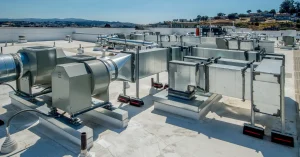
Caption: Rooftop hospital HVAC units provide critical ventilation, filtration, and temperature control. In healthcare facilities, ventilation goes way beyond comfort – it helps control the spread of airborne infections. Proper HVAC design keeps indoor air quality safe for patients and staff.
HVAC Systems in Healthcare: Protecting Patients and Ensuring Comfort
Healthcare HVAC (Heating, Ventilation, and Air Conditioning) systems do far more than keep the temperature comfortable. They are engineered specifically to promote a clean, safe environment for patients, staff, and visitors. Key aspects of hospital HVAC include:
- Air Filtration and Purification: Hospital HVAC systems use high-efficiency filters (often HEPA filters) to remove dust, bacteria, viruses, and other contaminants from the air. Ventilation air dilutes indoor viral and bacterial contamination, lowering infection risks. For example, airborne diseases like tuberculosis require special ventilation and filtration to contain them.
- Ventilation and Air Exchange: Unlike ordinary buildings, hospitals follow strict ventilation rates such as those in ASHRAE Standard 170: Ventilation of Health Care Facilities. High air exchange rates (e.g. 6 to 20+ air changes per hour in critical areas) continuously introduce fresh air and exhaust stale air. This helps flush out airborne pathogens and odors, maintaining indoor air quality (IAQ) at safe levels.
- Directional Airflow and Pressure Control: HVAC systems maintain pressure differences between areas (for instance, keeping negative pressure in isolation rooms to contain infectious agents, and positive pressure in operating rooms to keep contaminants out). These engineering controls – like pressure differentials, airflow direction, and building pressurization – directly contribute to maintaining asepsis (sterility) in healthcare spaces. Proper airflow design ensures that air moves from clean to less-clean zones, preventing cross-contamination.
- Temperature and Humidity Management: Hospitals carefully regulate temperature and humidity. Proper humidity (typically 40–60% RH) helps reduce infection spread and keeps patients comfortable. For example, overly dry air can irritate the respiratory tract and hinder patient recovery by encouraging infections. Meanwhile, precise temperature control is vital in areas like operating rooms (to keep surgeons comfortable and patients stable) and in pharmacies or labs (for medication and equipment storage).
- Specialized Zone Control: Different departments have unique HVAC needs. Operating theaters, intensive care units (ICUs), isolation rooms, imaging suites, and labs all have tailored requirements (specific air change rates, cooling loads, humidification, etc.). HVAC design for hospitals is highly sophisticated to meet these varied demands. For instance, operating rooms often require low temperatures and high airflow, while burn units need very warm, humid air to aid healing.
Infection Control is a Primary Purpose: Above all, hospital HVAC is designed with infection control in mind. “Infection control is a primary purpose of HVAC systems in hospitals,” notes Dan Koenigshofer, a public health engineer. Good HVAC design, combined with rigorous cleaning protocols, reduces the risk of hospital-acquired infections (HAIs) by limiting how far pathogens can travel through the air. Studies have found that inadequate ventilation can contribute to infection outbreaks, whereas proper ventilation “helps control the transmission of airborne infections and can reduce hospital infections overall.”
Patient Comfort and Healing: While safety is paramount, comfort is also critical. Patients heal better in a comfortable environment. Efficient HVAC systems quietly maintain pleasant temperatures and humidity for patients and exhausted staff alike. According to research, a well-regulated indoor climate can “lead to an improved healing environment for the patient, contributing to shorter patient stays.” No one recovering from surgery wants to shiver in cold or sweat in heat—thus, HVAC is directly tied to patient satisfaction and recovery outcomes.
Reliability and Redundancy: Hospitals operate 24/7 year-round, and their HVAC can never take a day off. These systems include redundancies like backup chillers, generators, and alarm monitoring. Regulations and accrediting bodies (e.g., The Joint Commission) require that critical areas have contingency plans if climate control falters. This is because HVAC failures can be devastating in healthcare. For example, in July 2025, Chicago’s Rush University Medical Center had to divert ambulances and cancel surgeries when a chilled water line failure knocked out the main tower’s AC during a heat wave.
Temperatures in the ER soared into the 80s°F until the system was restored. This incident highlights the importance of hospitals’ insistence on preventative maintenance and swift emergency service for HVAC. Reputable contractors like Iron Mechanical design systems with emergency backups and offer 24/7 response to minimize downtime. (One Iron Mechanical healthcare client attests, “We have been working with Iron Mechanical for a couple of projects and they have been the best in my 10+ year experience…”)
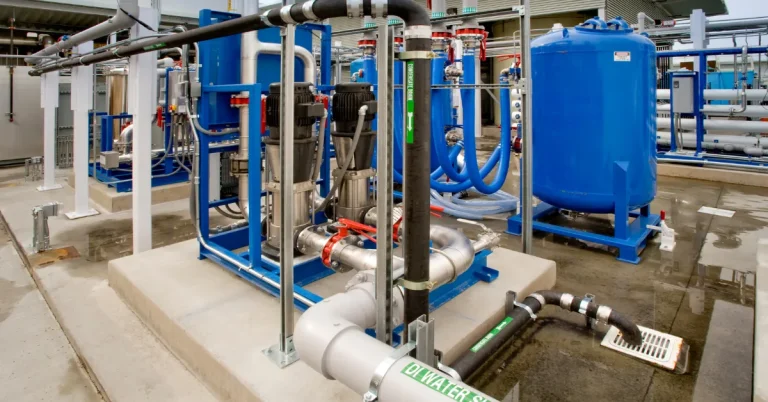
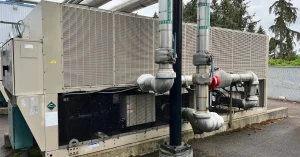
Caption: A high-capacity chiller and pump system installed outside a hospital. Large equipment like this provides cooled water and air conditioning for the entire facility. Hospitals often use central HVAC plants with backup units, so critical areas stay cool and ventilated even if one component fails. Energy-efficient designs and regular testing help avoid outages that could endanger patients.
Plumbing Systems in Healthcare: Safe Water Supply and Sanitation
 In parallel with HVAC, a hospital’s plumbing and piping systems are absolutely vital to patient health and daily operations. Healthcare plumbing is far more complex than a standard commercial building – it must deliver water for drinking, hand hygiene, patient care, sterile processing, heating/cooling systems, and safely dispose of all waste, all while preventing infection. Key roles of healthcare plumbing include:
- Providing Clean, Safe Water: Hospitals need a constant supply of potable water for patients and staff. This goes beyond sinks and showers – water is used in patient care (drinking water, dialysis, hydrotherapy), sterilizing surgical instruments, medical lab tests, and more. Facilities such as hospitals need safe drinking water to care for patients, perform surgeries, and sterilize instruments. Any compromise in water quality can directly harm vulnerable patients. Thus, plumbing systems are designed with materials and filters to preserve water purity. The integrity of plumbing supply lines is critical in delivering safe, potable water for drinking, handwashing, and patient care. Many hospitals use copper or stainless steel piping for their antimicrobial properties and durability in providing clean water. Regular water testing is also routine to catch any contamination early.
- Infection Prevention and Legionella Control: Water can harbor dangerous pathogens if not properly managed. A notorious risk is Legionella bacteria, which can grow in warm stagnant water and cause Legionnaires’ disease (a severe pneumonia). Healthcare facilities are required to implement water management programs to prevent such outbreaks. The CDC warns, “water can carry germs that threaten patient safety and cause healthcare-associated infections.” To combat this, hospital plumbing systems are engineered to minimize “dead legs” (unused pipe sections where water can stagnate) and keep hot water hot enough to inhibit bacterial growth. They may incorporate UV disinfection, constant circulation loops, and automated flushing. Regular maintenance and design choices (like avoiding materials that promote biofilm) are pivotal – for example, the use of smooth pipes and periodic disinfection helps ensure Opportunistic Pathogens of Premise Plumbing don’t take hold. In sum, the plumbing system is a front-line defense against waterborne infections.
- Reliable Waste Removal and Sanitation: Every day, a hospital produces enormous amounts of wastewater from sinks, toilets, showers, laundries, labs, and operating rooms. The plumbing system must safely remove this waste without exposing occupants to sewage or biohazards. Proper sanitation in healthcare facilities hinges on effectively removing wastewater through well-designed drain and waste lines. This includes using anti-microbial and chemical-resistant materials (e.g., cast iron or specialized PVC) and plumbing traps and vents to prevent sewer gases or pathogens from re-entering patient areas. Backflow preventers are installed to ensure that wastewater can never mix with clean water supplies. Put, a blockage or backup can be catastrophic – it could flood a ward or procedure room with contaminated water. Thus, hospital plumbing is designed with redundancy and accessibility for quick repairs if needed. (For instance, multiple drain routes and maintenance valves are provided.)
- Hot Water and Specialized Fluids: Hospitals require large volumes of heated water for patient showers, washing linens, and sterilization. Plumbing systems include high-capacity water heaters or steam systems to supply reliable hot water at all times, even during peak usage. In addition, medical gases (like oxygen, vacuum lines, and medical air) are often considered part of the broader mechanical/plumbing systems in healthcare. These gases flow through pipe networks to patient rooms and operating theaters. While technically separate from water plumbing, they underscore the importance of piping infrastructure in patient care. Iron Mechanical’s expertise as a full mechanical contractor means they coordinate HVAC, piping, and medical gas systems to work together seamlessly.
- Durability and Redundancy: Hospital plumbing must meet the challenge of continuous, heavy use. High-quality materials (copper, steel, glass-lined tanks, etc.) and installation practices are used to prevent leaks or failures. Additionally, many facilities have redundant water supply lines, storage tanks, or pumps to ensure water flow even if a municipal line breaks. For example, some hospitals have on-site water storage or tanker connections for emergencies. We have seen real-world cases where a water main break forced hospitals to delay care and transfer patients – one facility had to evacuate two dozen patients after a burst pipe caused flooding and a power outage. To avoid such chaos, healthcare plumbing systems are robustly built and often segmented so that an issue in one zone doesn’t cripple the entire hospital.
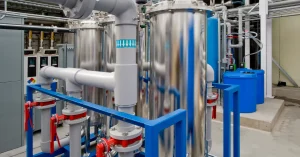
Caption: A hospital mechanical room with extensive plumbing infrastructure and water treatment equipment. Robust plumbing systems like these deliver clean hot and cold water throughout the facility and support critical systems (e.g., boilers, sterilizers). They are designed with corrosion-resistant materials and filters. In healthcare, even the plumbing layout and sink design factor into infection control – for instance, to prevent splashing that could spread germs.
Regulatory Standards for Water Systems: Healthcare plumbing is governed by strict standards and guidelines. The Facility Guidelines Institute (FGI) and local building codes specify requirements for healthcare water systems (like redundant heaters, special waste disposal for lab and pharmaceutical waste, etc.). CDC and Centers for Medicare & Medicaid Services (CMS) regulations now require hospitals to have a water management plan to control Legionella and other waterborne risks.
This means hospitals must routinely assess their water system design and maintenance. Working with specialized contractors to develop and implement these plans is common. Iron Mechanical, for example, can assist Sacramento-area hospitals with conducting Water Infection Control Risk Assessments (WICRA) and upgrading plumbing fixtures or piping where needed to meet these patient safety goals.
Meeting Codes and Ensuring Compliance
 Healthcare facilities are one of the most regulated building types, and HVAC and plumbing systems must comply with a web of healthcare-specific codes, standards, and best practices. Compliance isn’t just a legal box to check – it directly correlates with patient safety and care quality.
HVAC Compliance: Hospitals follow guidelines like ASHRAE 170 (ventilation standard), ASHRAE 62.1 (indoor air quality), and NFPA 99 (healthcare facilities code for safety, including ventilation for hazardous gases). Accrediting bodies such as The Joint Commission have Environment of Care (EC) standards that require documentation of ventilation rates, air filter changes, and pressure monitoring in sensitive areas. For instance, operating rooms and isolation rooms must be routinely tested for proper pressurization and air exchange.
Hospitals cannot shut down their HVAC systems except for maintenance because continuous operation is critical (AIA guidelines prohibit shutting down hospital HVAC except for required maintenance windows). New healthcare constructions must commission the HVAC system before occupancy, verifying it meets design specs for airflow, filtration, and climate control. By working with experienced mechanical engineers, healthcare facilities ensure that everything from ductwork size to thermostat controls aligns with these stringent requirements.
Plumbing Compliance: Plumbing in hospitals must meet the national and local plumbing codes (e.g., UPC or IPC), but also additional healthcare guidelines. There are rules for minimum numbers of sinks, hands-free faucet operation (to reduce touch contamination), anti-scald devices on patient showers, and so on. Water temperature is usually regulated (for example, hot water for patient areas is often stored around 140°F and then mixed down at faucets to prevent scalding, but also prevent Legionella growth).
Backflow preventers and vacuum breakers are mandatory on connections to any equipment (like lab apparatus or dialysis machines) to avoid contamination of the water supply. Hospitals also maintain constant water pressure requirements; a significant pressure drop could suck contaminants into pipes, so booster pumps and pressure monitors are utilized. Codes like NFPA 99 cover medical gas piping installation and require strict testing and certification of those lines. Regular inspections by authorities make sure these critical utilities are up to code. Non-compliance can result in penalties or even shutdowns — but more importantly, it can endanger lives.
For a hospital administrator or facilities manager, navigating these regulations can be daunting. This is where partnering with a qualified mechanical contractor becomes invaluable. A company with healthcare experience, such as Iron Mechanical, ensures that every HVAC duct and plumbing pipe meets the health standards and passes inspections. Our team stays updated on code changes and works closely with hospital facility departments to schedule any disruptive work (like pipe replacements or HVAC upgrades) with minimal impact on patient care.
Energy Efficiency, Sustainability, and Cost Savings
While patient safety is the top priority, healthcare facilities also look to their HVAC and plumbing systems for efficiency and sustainability. Hospitals are energy-intensive, operating 24/7 with large volumes of outside air and hot water usage. Inefficient systems can drive operating costs sky-high. Modern designs aim to balance safety with energy conservation:
- Energy-Efficient HVAC: New healthcare HVAC systems incorporate energy recovery ventilators, high-efficiency chillers and boilers, variable speed drives on fans and pumps, and smart building automation controls. For example, heat exchangers can reclaim heat from exhaust air to pre-warm incoming cold air (while keeping air streams separated for hygiene). ASHRAE Standard 189.3 and the Advanced Energy Design Guides for Hospitals provide strategies to cut energy use without compromising health requirements. Simple measures like zoning controls (so unoccupied areas can have setbacks) and maintaining optimal humidity (preventing over-humidifying or over-cooling) can yield big savings. Hospitals in Sacramento’s climate may use economizer cycles to bring in cool outside air on mild nights, giving chillers a break. Over time, these efficiency measures lower utility bills and also reduce the facility’s carbon footprint.
- Water Conservation: Plumbing systems in healthcare can also be made more sustainable. Low-flow fixtures, motion-sensor faucets, and efficient steam sterilizers reduce water waste. Some hospitals implement gray water reuse or rainwater harvesting for non-potable uses like irrigation or cooling tower makeup. However, water-saving must never compromise hygiene, so fixtures are chosen that still meet clinical cleaning needs. Given California’s focus on water conservation, many Sacramento healthcare facilities pursue these upgrades. Preventive maintenance (fixing leaks promptly, calibrating valves) is another key to avoiding water waste.
- Cost of Ownership: Investing in quality HVAC and plumbing upfront pays off. These systems have long lifecycles (15-30+ years), so energy-efficient and durable equipment yields savings in the long run. Additionally, reliable systems mean fewer emergency repairs and less downtime that could disrupt services (which can have huge financial and reputational costs for a hospital). Conducting a life-cycle cost analysis during design is a best practice – considering not just initial cost but maintenance, energy, and potential failure costs. Often, hospitals find that spending a bit more on, say, better piping material or a higher-efficiency air handler is worth it for the performance and longevity gains.
Choosing the Right Mechanical Partner for Healthcare Projects
 Designing, installing, and maintaining HVAC and plumbing systems in healthcare facilities is a specialized field. Hospital projects require meticulous planning, close coordination, and knowledge of healthcare operations. For example, retrofitting an ICU’s air system might involve temporary negative pressure tents and working around occupied patient rooms – definitely not a job for a run-of-the-mill contractor. This is why healthcare providers partner with experienced mechanical contractors who understand the stakes.
Iron Mechanical, based in Sacramento, CA, has built a reputation as a trusted partner in healthcare construction and maintenance. We combine deep technical expertise with a proactive, client-focused approach. Our teams have completed complex medical facility projects, from new hospital towers to renovations of acute care centers. We prioritize:
- Patient Safety and Minimal Disruption: We often work in live hospital environments and strictly adhere to infection control risk assessment (ICRA) protocols. This includes dust containment, negative air machines, and scheduling work during off-peak hours to avoid impacting patient care.
- Technical Excellence: Our engineers and technicians are well-versed in healthcare-grade systems – from sizing isolation room HVAC units to installing medical gas and vacuum systems. We follow the latest ASHRAE, NFPA, and OSHPD (California’s healthcare construction authority) guidelines.
- Project Management & Coordination: Healthcare projects have many stakeholders (owners, architects, clinical staff, inspectors). Iron Mechanical excels in communication and coordination, delivering projects on time and within budget. We use tools like 3D BIM modeling to prefabricate assemblies (“Build it Before We Get There” is our motto) – shortening onsite construction time and reducing errors.
- Ongoing Service: After installation, we don’t just walk away. Our dedicated Service Department offers preventive maintenance and 24/7 emergency support for commercial HVAC and plumbing systems. For healthcare clients, this means peace of mind that help is one call away if an issue arises at 3 AM on a Sunday. One facilities manager with over a decade of experience noted: “We have been working with Iron Mechanical for a couple of projects and they have been the best in my 10+ year experience…” This kind of feedback underscores our commitment to quality and responsiveness.
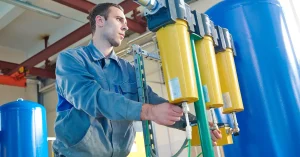
Caption: An Iron Mechanical technician inspects and maintains hospital mechanical equipment. Skilled professionals are essential to keep HVAC and plumbing systems running optimally. Regular maintenance helps avoid unexpected failures that could jeopardize patient safety. Iron Mechanical’s team brings first-hand expertise to every project, ensuring healthcare facilities get reliable performance and quick solutions when issues arise.
Finally, choosing a capable partner is not just about technical know-how – it’s about trust. Healthcare administrators need to trust that their contractor will do the job right and stand behind their work. At Iron Mechanical, we value that trust greatly. We see ourselves as an extension of your facilities team, working to ensure your hospital’s critical systems never let you down. From initial design consultation to final commissioning and ongoing maintenance, we’ve got your back.
Frequently Asked Questions: HVAC & Plumbing in Healthcare Facilities
 What exactly is the role of an HVAC system in a hospital or clinic?
Hospital HVAC systems do more than control temperature—they’re critical for infection control. They filter air, maintain fresh outdoor air exchange, and manage pressure differentials to keep contaminants contained. Per ASHE/CDC guidance, key functions include diluting airborne pathogens via high air-change rates, using HEPA/MERV-14 filters, and establishing positive or negative pressure zones as needed.
How often should ventilation and HVAC systems be inspected or maintained?
Maintenance should follow a regular preventative schedule, typically:
- Annually: Full system inspection, including airflow balance checks and mechanical system review.
- Quarterly: Filter cleaning or replacement, and cleaning cooling coils or UV components.
- This follows NA DCA and ASHE recommendations, as neglect can compromise patient safety and system reliability.
What is directional airflow, and why does it matter?
Directional airflow is airflow from clean areas toward less clean areas. In healthcare, negative‑pressure rooms contain infectious agents, and positive‑pressure rooms (e.g., ORs) keep contamination out. These pressure differentials are engineered via ventilation balance and monitored continuously.
What filtration levels are recommended for healthcare HVAC systems?
For clinical spaces, filters rated at MERV‑14 or higher are generally required. HEPA filters (99.97% efficiency) are used in isolation rooms or surgical suites. Higher MERV ratings improve pathogen removal but must balance with airflow capacity so as not to impede HVAC performance.
Can hospital plumbing systems spread infections? How are they managed?
Yes—waterborne pathogens like Legionella can develop in stagnant water. Hospitals implement water management programs, use materials like copper or stainless steel piping, avoid “dead legs,” use automated flushing, and maintain hot-water temperatures to limit bacterial growth.
How often should hospital plumbing lines and fixtures be inspected or replaced?
Routine inspections are critical:
- Year-round monitoring of water temperatures and flow rates.
- Quarterly or biannual testing of backflow preventers, filters, and pressure tanks.
- Replacement planning based on material lifespan (e.g., copper or stainless steel distributions often last decades), especially to prevent leaks or contamination.
What is the first step when upgrading HVAC or plumbing systems in a healthcare facility?
First, conduct a system audit and Test and Balance (TAB) evaluation to assess current performance. Then engage an experienced healthcare mechanical contractor to design upgrades that meet current codes, such as ASHRAE 170 and health facility guidelines. Renovated areas must comply with current standards—even if originally built under older code cycles.
Can HVAC systems transmit viruses between rooms?
While HVAC systems recirculate air, properly designed hospital systems minimize risk. With correct filtration, ventilation rates, and directional airflow, transmission via HVAC systems is minimal. Proper maintenance and filter specification ensure a low risk of cross‑contamination.
Are healthcare HVAC and plumbing systems different from those in commercial buildings?
Absolutely. Hospitals require higher ventilation rates, specialized pressure control, medical gas distribution, hot water capacity, and compliance with healthcare standards (e.g., ASHRAE 170, NFPA 99). These systems demand specialized design, maintenance schedules, and contractor expertise.
Why partner with an experienced contractor for healthcare projects?
Healthcare mechanical systems require strict infection-control procedures, code compliance, phased construction in occupied environments, commissioning for regulatory approvals, and facility coordination. An experienced contractor like Iron Mechanical ensures seamless integration, compliance, and minimal disruption to patient services.